

There are moments when storytelling moves beyond television screens and enters spaces where ideas shape societies. At the UK Forum on Cultural Diplomacy 2026, held at the historic House of Lords and the Palace of Westminster in London, Pakistani narratives found such a moment, one rooted in culture, identity and lived experience.

Fasih Ur Rehman and Executive Director Tehreem Chaudhary with Mr. Miguel Angel Moratinos, Under-Secretary-General, High Representative for the UN Alliance of Civilizations & Special Envoy to Combat Islamophobia.
Among global leaders, diplomats and cultural thinkers, Green Entertainment represented Pakistan’s evolving media voice, bringing conversations about representation, women and storytelling into a forum traditionally shaped by politics and policy. Representing the channel were CEO Fasih ur Rehman and Executive Director Tehreem Chaudhary, whose presence reflected how creative industries are increasingly becoming part of global cultural dialogue.

Addressing parliamentarians, global representatives and policymakers, Tehreem Chaudhary spoke from a deeply personal and professional place, as a Pakistani woman, a Muslim, and a media leader. She shared how storytelling does more than entertain; it influences how people see themselves and others, quietly shaping what societies come to accept and imagine. She also reflected on how global discussions often speak about women rather than include them, noting that this distance creates narratives far from real, lived experiences.
“Media does not simply reflect society,” she noted during her address. “It shapes what is accepted, respected and imagined as possible. When a young woman sees herself represented with depth and integrity, she stops questioning her ambition and starts imagining how far it can take her.”

Entertainment, during discussions at the UK Forum on Cultural Diplomacy 2026 at the House of Lords.
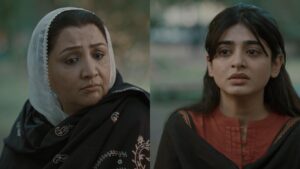
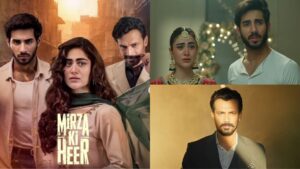
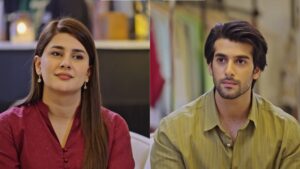
This belief has become central to Green Entertainment’s creative choices. Rather than relying on formula-driven narratives, the channel’s dramas have explored women within real social ecosystems; families, workplaces, institutions and power structures. Stories like Working Women, Standup Girl, 22 Qadam, Jindo, Nauroz, and Pamaal have focused on characters making difficult choices, navigating ambition, and asserting agency in ways that feel recognizable rather than idealized. As she emphasized in her speech, “Dignity lies in honesty, not perfection,” underscoring why authentic representation remains at the core of the channel’s storytelling philosophy.
Tehreem Chaudhary also reflected on the broader cultural and historical context of women’s leadership. She cited examples from Muslim history, including Fatima al-Fihriya, who established the world’s oldest university, and Hazrat Khadija (R.A), the wife of Prophet Muhammad (peace be upon him), a respected businesswoman and leader. She also referenced Benazir Bhutto, Pakistan’s first female Prime Minister, as a source of inspiration for women leaders today. She highlighted how women from Muslim and South Asian societies are frequently discussed in global conversations without being directly included, resulting in narratives that often feel removed from lived realities. She underlined that Pakistani society, like many others, is complex, where tradition and progress coexist, and faith and ambition are not in conflict. Women’s leadership is already present, and their presence reflects competence, credibility and sustained authority.

For Green Entertainment, participating in the forum reinforced a simple but powerful idea: television is not just entertainment, it is culture in motion. When stories are told with honesty and depth, they resonate beyond borders and speak to shared human experience.
She reminded the forum that empowerment cannot be imposed from outside, stressing that it “must emerge locally, shaped by context and supported by institutions willing to listen.”

Diplomacy 2026.
As global conversations around representation and influence continue, Green Entertainment’s presence at the Palace of Westminster and the House of Lords reflected a meaningful shift. Pakistani stories are being heard not as exceptions, but as part of a broader, ongoing dialogue, one shaped by authenticity, nuance and confidence.