


 Most countries treat artificial intelligence as something to adopt once it’s fully developed elsewhere, a finished product to import and implement. Pakistan is taking a radically different approach. Rather than waiting for AI solutions to arrive from Silicon Valley, the country is investing in AI education now, betting that building human capacity today will determine who shapes tomorrow’s technological landscape.
The logic is compelling. By the time AI tools become mainstream commodities, the competitive advantage won’t lie in using them, it will belong to those who understand how to build, customize, and innovate upon them. Pakistan’s educational institutions are responding to this reality with unprecedented urgency. Universities across Karachi, Lahore, Islamabad, and smaller cities are integrating machine learning, neural networks, and natural language processing into undergraduate curricula. What’s more significant is the democratization happening beyond elite institutions. Online platforms, government-sponsored bootcamps, and community-led workshops are making AI education accessible to students who might never set foot in a traditional computer science department. This isn’t about creating a small cohort of specialists, it’s about building widespread AI literacy across an entire generation.
Education without application remains theoretical. That’s why policy frameworks are increasingly aligned with practical AI deployment across sectors. From digitizing government services using intelligent automation to supporting agritech startups that apply machine learning to crop management, there’s deliberate effort to create environments where newly trained AI talent can immediately apply skills. This creates a virtuous cycle, education produces skilled individuals, real-world projects provide experience, and successful implementations attract investment that funds more education and infrastructure.
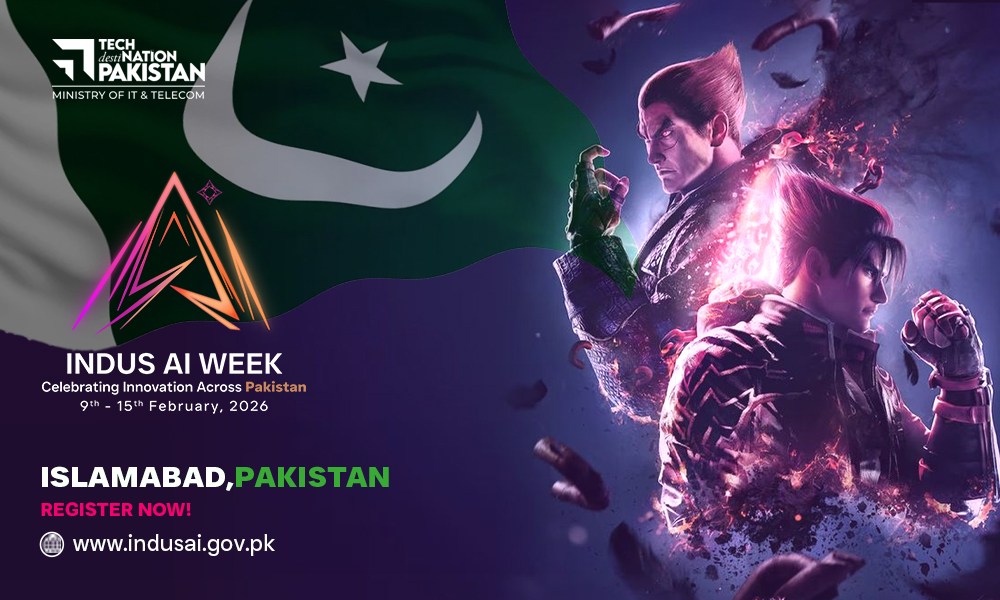
Indus AI Week stands as a cornerstone of this educational mission. Organized to accelerate Pakistan’s AI journey, the event brings together educators, students, industry practitioners, and policymakers in recognition that AI advancement requires coordinated effort across all stakeholders. For students learning Python and TensorFlow in classrooms, Indus AI Week offers exposure to how those skills translate into commercial applications. For educators, it provides insights into industry needs that should shape curriculum development. For the Ministry of Information Technology and Telecommunication, it’s a platform to demonstrate policy commitment and rally ecosystem support around AI as a national priority rather than a niche interest.
What distinguishes Pakistan’s approach is the emphasis on contextual AI education. Students aren’t just learning to replicate models from Western textbooks, they’re encouraged to think about how AI addresses specifically Pakistani challenges. How can natural language processing work effectively with Urdu, Sindhi, Pashto, and Punjabi? What machine learning approaches best suit agricultural patterns in Punjab versus Sindh? How should AI ethics be framed in contexts where data privacy norms differ from Silicon Valley assumptions? These questions ensure that AI education produces not just technically competent graduates, but innovators who can build solutions genuinely relevant to local and regional markets.
The timing is critical. Global AI development is still in relatively early stages, meaning Pakistan isn’t decades behind, it’s entering a race where finish lines haven’t been determined yet. By teaching AI now, before widespread adoption, the country is positioning its workforce to be architects rather than merely users. The students trained today won’t just implement AI systems designed elsewhere, they’ll build the next generation of AI tools, potentially creating intellectual property and companies that serve not just Pakistan but the entire Global South.
This investment in human capital represents Pakistan’s most sustainable competitive advantage. Technology can be imported, infrastructure can be built with investment, but the knowledge, creativity, and problem-solving capabilities developed through education create lasting value that compounds over time.
Join the movement to build Pakistan’s AI future. Indus AI Week brings together everyone committed to making Pakistan an AI innovator, not just an adopter.